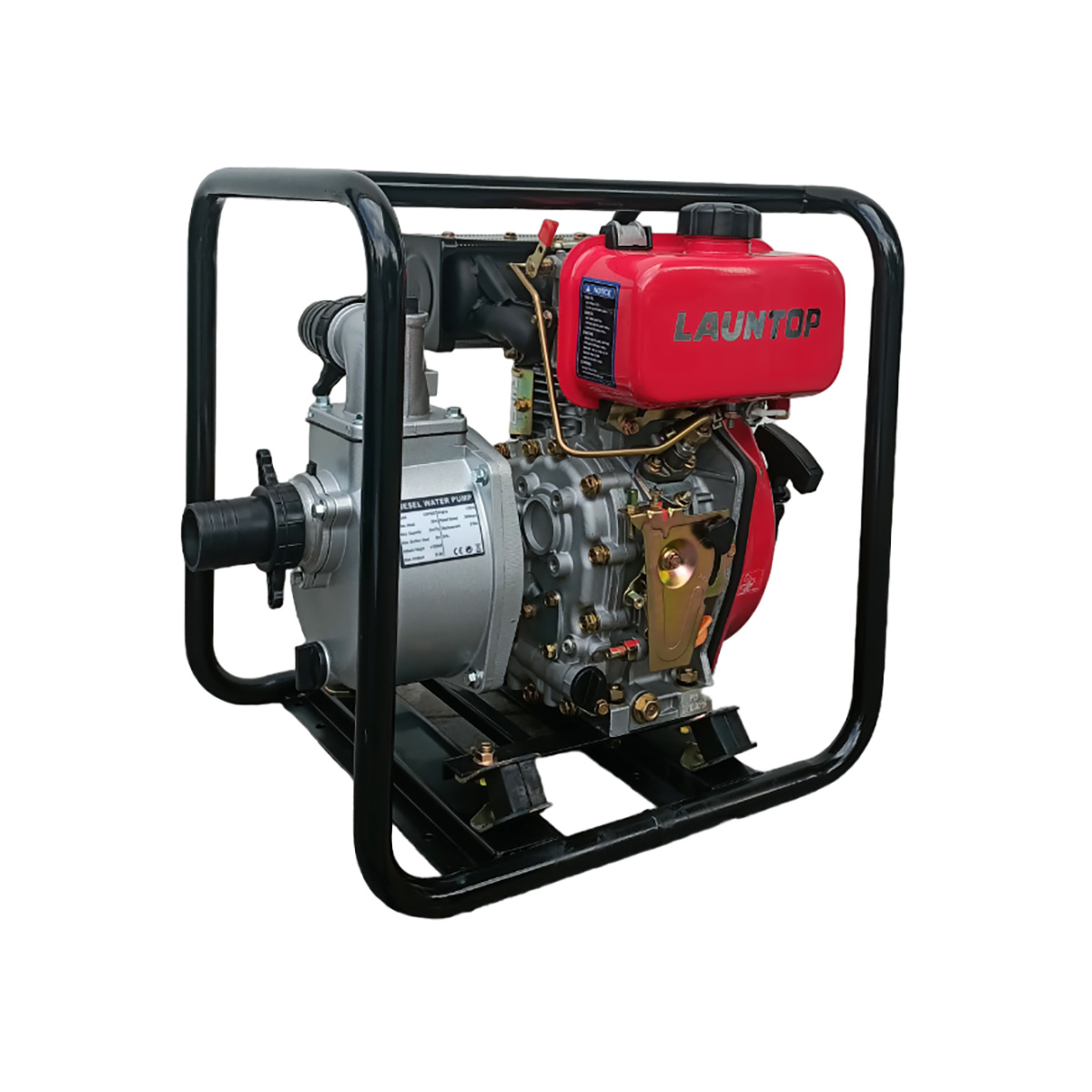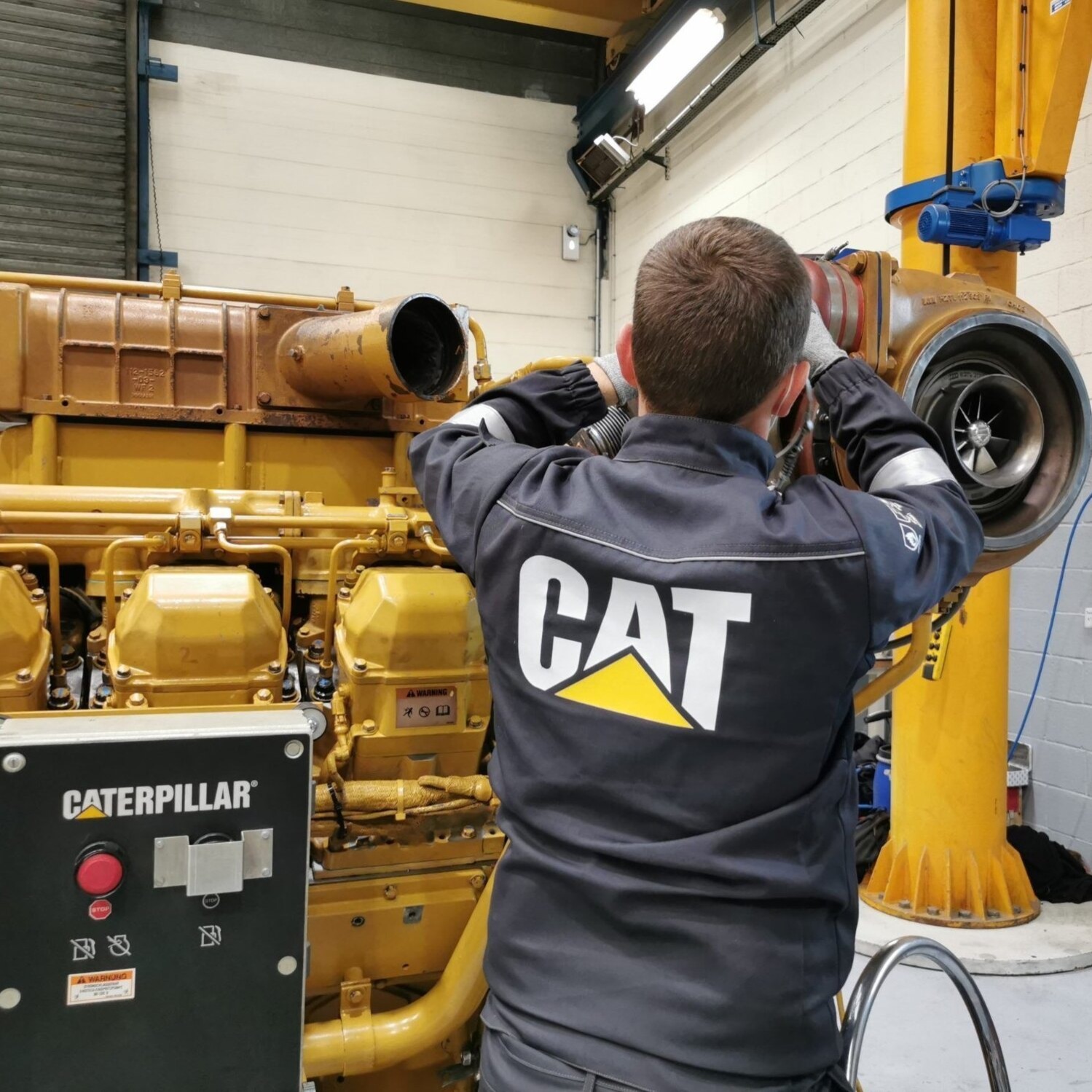
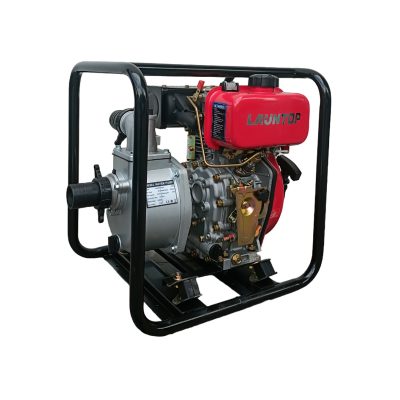
The water pump is one of the most important components in generators. By circulating water inside the engine, it controls temperature changes in the unit and helps cool the engine components and cylinders. This component ensures that water circulates through the engine to improve efficiency and performance.
An increase in the temperature of the unit can disrupt its operation and cause damage. Therefore, there must be a component that controls this temperature while the engine is running, and this responsibility is handled by the water pump.
First, water enters the water pump from the radiator through the thermostat section and then flows into the oil cooler and the main cylinder passage. Finally, it moves toward the cylinder head liners, cooling radiator fan, thermostat, and other components. This circulation continues until the engine temperature reaches a balanced level.
Water Pump Components
- Bearing
- Water pump mounting bracket
- Oil seal
- Spacer plate
- Water pump housing
- Water pump impeller assembly
Signs of Water Pump Failure
The following conditions may indicate that this part of the unit is damaged:
The diesel generator temperature increases.
The impeller rotation fan operates continuously, but the temperature gauge does not decrease.
Although the unit has a high temperature, the radiator remains cold.
Despite the previous symptoms, no water leakage is observed.
Water Pump Failure
Any damage to the generator water pump can cause irreparable damage to the power generator. However, you should know that the water pump itself is not always the faulty component, and a damaged thermostat or radiator may also cause an increase in temperature as well as instability in the coolant temperature.
In any case, if the water pump itself is damaged, it is better to replace it, and repairing it is not recommended in most cases. In the following sections, we will introduce the causes of water pump failure and the factors that can damage this component.
Rusting of the Blades Inside the Water Pump
Using plain water, using non-standard water, or failing to add antifreeze to the water can cause sediment buildup and corrosion in the internal engine passages.
Sediment that forms inside the radiator narrows the water channels and eventually causes them to become clogged. On the other hand, these deposits create thermal insulation and affect heat dissipation.
This type of problem can also occur in the liners, block, and cylinder.
To remove the accumulated deposits, the upper and lower radiator tanks must be opened, and a tool known as a radiator rod must be used to clear the channels.
However, in channels where the amount of sediment is very high, this method will not work, and under these conditions, the entire radiator core must be replaced.
To remove deposits from the water passages inside the cylinder, the component must be immersed in an acidic solution. Depending on the thickness of the deposits, it should remain in the solution for a suitable period and then be washed with hot water and dried.
Freezing of Water Inside the Engine and Cracking of the Component Housing
In this case, radiator water leakage occurs.
Breaking of the Drive Shaft
This causes the coolant flow to stop, and if the engine is not shut down under these conditions, components may melt and the burning of gaskets can cause serious damage to the engine.
Failure of the Bearing or Primary Ring
Failure of the primary ring, bearing, or oil seal can cause problems such as water leakage, water entering the oil, or water entering the radiator.
Corrosion of Gears and Other Parts
Failure to use antifreeze
Use of Non-Standard Antifreeze
Failure of the retaining ring
Wear and erosion of the internal blades
Water Pump Durability and Service Life
This component operates continuously and allows the engine to withstand the heat generated during the combustion process.
When discussing the service life of this component, it can be said that it has very high durability and longevity. However, because failure of this component can lead to damage and failure of the entire unit, manufacturers make every effort to increase its durability as much as possible.
In any case, to prevent damage to this component, it is recommended that you pay close attention to the warning signs of the unit.
Replacing the Diesel Generator Water Pump
To replace the water pump, the following steps are performed:
First, the diesel generator must be cold, and the radiator water must also be drained.
The radiator bolts and hose clamps must be opened.
The radiator is separated from the engine.
Next, the fan blade bolts, pulley bolts, and bolts located around the housing are removed.
Finally, during reassembly, the housing gasket and water pump bolts are tightened evenly. After that, the fan blade and pulley are installed, and finally, the radiator bolts and hose clamps are tightened.
Disadvantages of the Diesel Generator Water Pump
First of all, you should know that this component is like the heart of the human body, and without it, the unit will stop operating. However, it may still have certain disadvantages:
Due to the water pump bearing or damage to the bushing, this component may produce noise while the unit is operating. In some cases, water may also leak from the water pump. Sometimes, the water pump blades may break. This can occur because the water inside the cylinder block freezes when the temperature drops and antifreeze is not present.
One of the important points that should be considered for the proper operation of the water pump is the water pumping pressure. If this pressure is higher or lower than the standard level, it can cause significant damage to the thermostat, hoses, radiator, connections, and other components.