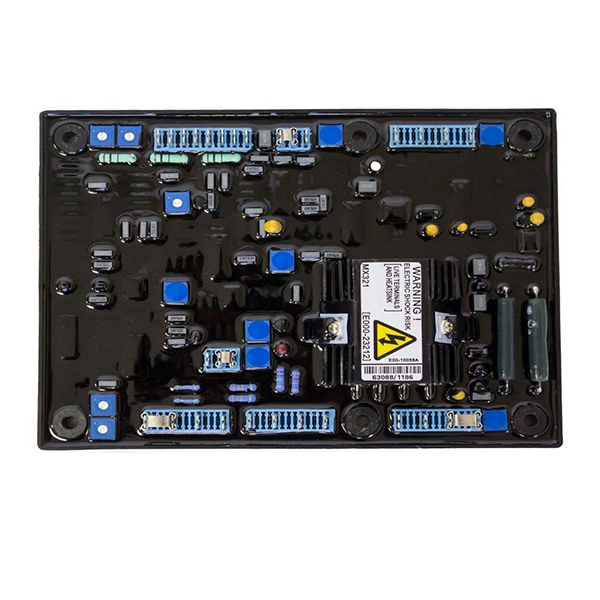
The way the AVR of the Stamford generator works is that when the diesel generator starts working, there is a small magnetic hysteresis on the rotor of the generator, which when the generator is rotated by its driver, a small voltage appears at the output, which is about 6 to 40 volts, which varies depending on the type of generator. AVR takes this voltage from the output and applies it to excite the generator.
As a result, as the excitation voltage increases, the output of the generator increases again. AVR repeats this process until the generator voltage reaches the rated value; Now, if the output voltage increases for any reason, the AVR generator immediately reduces the excitation power supply. If the generator output voltage drops, the AVR will increase the excitation supply.
The MX321 is a three-phase automatic voltage regulator and forms part of the excitation system for a brushless generator. The excitation power is taken from a three-phase permanent magnet generator (PMG), to isolate the AVR control circuits from the effect of non-linear loads and to reduce radio frequency interference on the generator terminals.
Stable generator short circuit current is another feature of PMG system. The AVR senses the voltage in the primary winding of the generator and controls the excitation, to compensate the output voltage of the generator within specified limits; It also compensates the load, speed, temperature and power factor of the generator. Three-phase RMS measurement is used for peak voltage regulation.
Click on the link below to see the details and information of this product.
For advice, to get more information and to buy the product, contact us through the contact portal on the contact page or our other social networks.